Engineering biology will
revolutionize the human condition.
A few first principles toward my North Star:

Life started itself
Life started itself
Earth-life emerged spontaneously from the primordial earth ~4 billion years ago and evolved itself into brand new phenomenal categories.
Earth-life emerged spontaneously from the primordial earth ~4 billion years ago and evolved itself into brand new phenomenal categories.
Evolved within the limit
Evolved within the limit
That a purely self-emergent, resource-constrained process could generate entirely novel categories of phenomena — including consciousness itself — strongly suggests our universe is capable of hosting other undiscovered phenomena.
That a purely self-emergent, resource-constrained process could generate entirely novel categories of phenomena — including consciousness itself — strongly suggests our universe is capable of hosting other undiscovered phenomena.
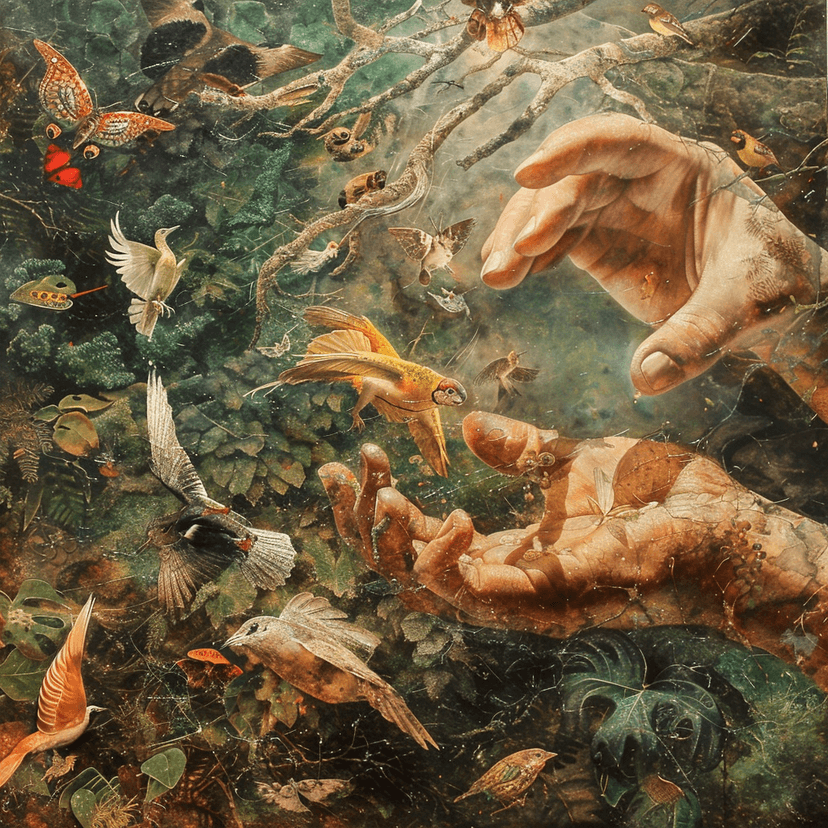
Has potential beyond the limit
Has potential beyond the limit
Natural selection was the only game in town, but isn’t the only way. An intelligently-guided, non-resource-constrained version of biology would result in forms and phenomena with as yet unimaginable capabilities.
Natural selection was the only game in town, but isn’t the only way. An intelligently-guided, non-resource-constrained version of biology would result in forms and phenomena with as yet unimaginable capabilities.
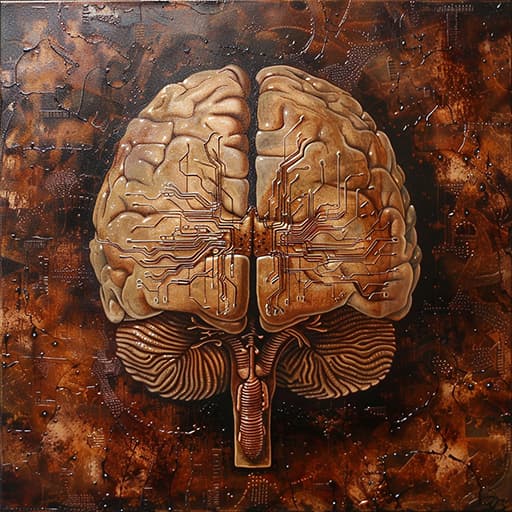
We too are engineerable biology
We too are engineerable biology
We ourselves exist on that same biological operating system. New categories of phenomena applied to our own biology will be the ultimate, human-experience-altering exploration.
We ourselves exist on that same biological operating system. New categories of phenomena applied to our own biology will be the ultimate, human-experience-altering exploration.
So, let’s accelerate bioengineering.
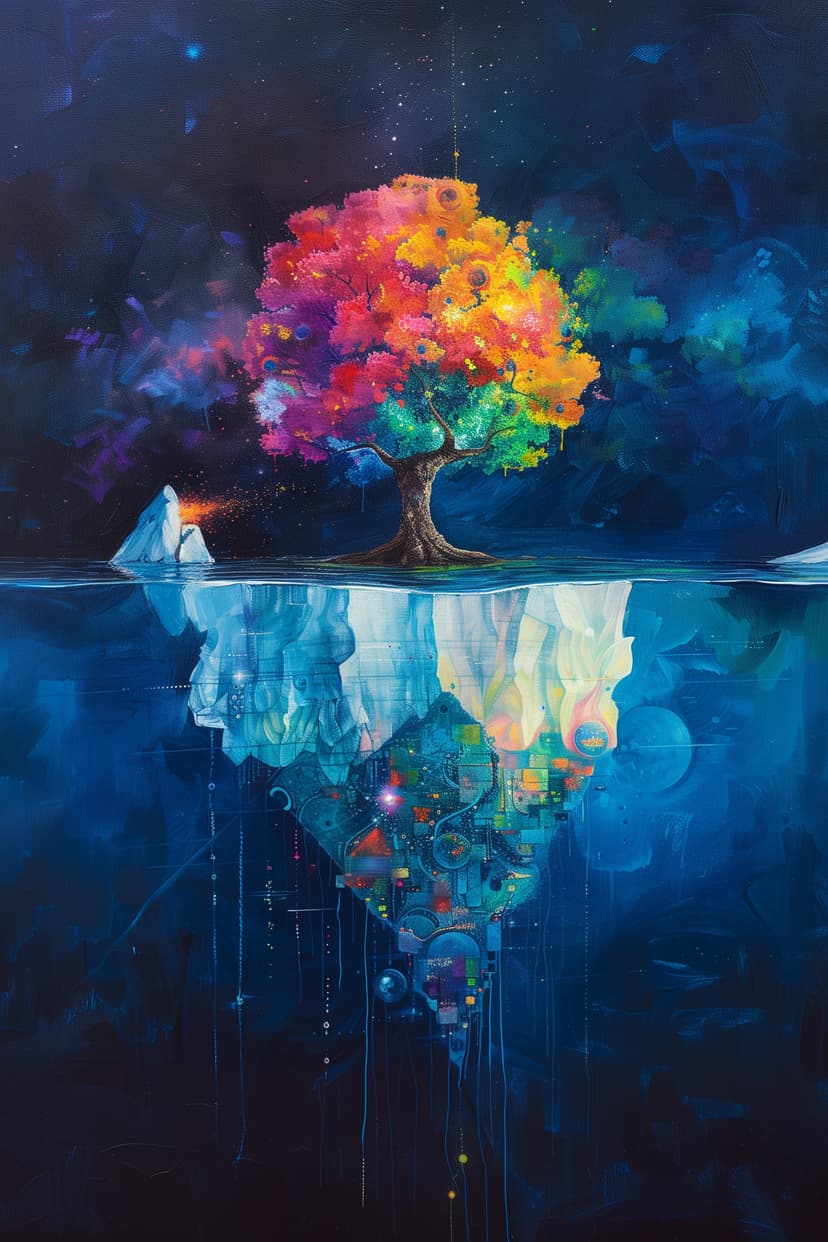
We’re at the tip of the genetic hyperspace iceberg.
The kinds and scales of mechanical and phenomenological entities possible is unimaginable.
So, let’s accelerate bioengineering.
We’re at the tip of the genetic hyperspace iceberg.
The kinds and scales of mechanical and phenomenological entities possible is unimaginable.
Powerfully, with AI
The chaos of biological complexity will almost certainly become best understood by AI.
The emergence of LLMs and their success with human language hints at the possibility for new understandings of biology.
Powerfully, with AI
The chaos of biological complexity will almost certainly become best understood by AI.
The emergence of LLMs and their success with human language hints at the possibility for new understandings of biology.


Fun javascript model of the origin of life
As imagined by Freeman Dyson in his 1985 book, Origns of Life.
This toy model treats early life as short chains of monomers drifting in a constrained soup. Red and blue sites swap through probabilistic mutations, and the live graph tracks how each population rises and falls over time. Move your cursor to perturb the system, nudging the particles away like a gentle environmental push. When chains get close enough, active sites can seed neighbors, hinting at how local interactions might propagate structure. The goal is not realism, but intuition for how simple rules can yield emergent patterns.
Fun simulation of the origin of life
As imagined by Freeman Dyson in his 1985 book,
Origns of Life.
This toy model treats early life as short chains of monomers drifting in a constrained soup. Red and blue sites swap through probabilistic mutations, and the live graph tracks how each population rises and falls over time. Move your cursor to perturb the system, nudging the particles away like a gentle environmental push. When chains get close enough, active sites can seed neighbors, hinting at how local interactions might propagate structure. The goal is not realism, but intuition for how simple rules can yield emergent patterns.
(Note: For best experience, try a tablet/desktop!)